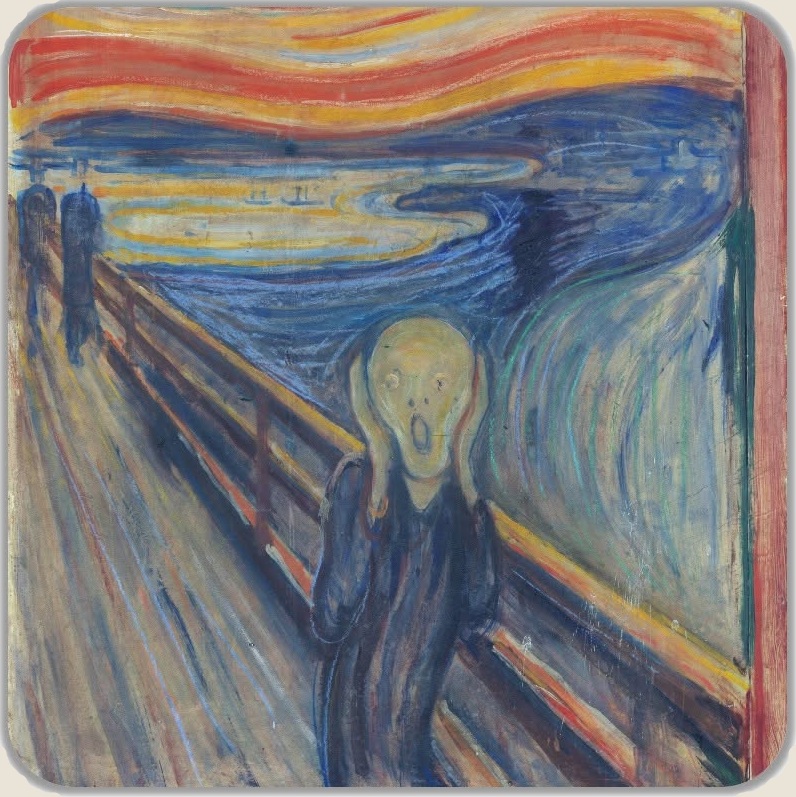
On Trauma, Emotions, and Chronic Pain
Stress and trauma can feed ongoing pain — even in people never diagnosed with PTSD. On the link between emotional processes, the brain's 'danger mechanism,' and chronic pain.
The previous article described a new method for treating chronic pain called PRT, whose aim is recovery from pain by rewiring the brain's "danger mechanism" — by changing the brain's responses to pain.
But — that same "danger mechanism" can also be overactive in response to other dangers, not only in response to the pain itself. In this way, everyday stress, traumas, and various emotional conflicts can also cause pain to appear or intensify.
If that last sentence sounded like gibberish to you, I recommend going over the previous articles in the series (links below), to get on the same page.
What's the Connection Between Trauma and Ongoing Pain?
After psychological trauma, the brain may enter a state of "over-defense." The heart rate spikes at every small noise, the high tension disrupts sleep, and the traumatic memory may break into awareness in nightmares or flashbacks. This phenomenon is known as PTSD (post-traumatic stress disorder), in which the brain's "danger mechanism" develops a heightened sensitivity to signs of danger from the world.
In such a state, the risk rises that ordinary sensations from the body will be interpreted as dangerous and experienced as physical pain — and indeed, studies show that psychological trauma (and childhood trauma in particular) increases the risk of developing chronic pain many times over.
Besides pain, depression and anxiety can also develop after a traumatic event. Over-sensitivity of the "danger mechanism" can manifest as a rise in anxious or depressive emotions and thoughts. This state can be temporary, or it can persist over time and be diagnosed as an anxiety or depression "disorder."
If you think about it, just as pain is a sensation that makes us avoid danger, so too are anxiety and depression, and most post-traumatic symptoms. When the "danger mechanism" is lit up, the brain may trigger pain, anxiety, depression, and other symptoms. As I've noted before — this is an uncontrollable process, usually unconscious, and very real!
In this situation, many patients with chronic pain are left without an answer from the system.
While nature (or God?) created us as one indivisible unit, modern medicine split the person between different specialists for body and mind, who work in parallel and don't communicate well enough with each other. Just like the Indian parable of the group of blind men who found an elephant, and each identified it as a different animal according to the part he was touching, without grasping the whole picture.
When the problem is not only in the body or only in the mind, treating each of them separately is doomed to fail over time. When that happens, the doctors refer patients to psychologists to treat the mind, who send them to physiotherapists to treat the body, and round it goes. Each profession thinks the other isn't doing enough, and the patient is left in the middle with no answer to their pain.
I Don't Have Trauma, Anxiety, or Depression. So How Is This Related to Me?
True, most people who suffer from chronic pain don't present the classic symptoms of PTSD or other anxiety and depression disorders. That said — many do have certain features that can affect the brain and the pain in a similar way.
For example — multiple stressors in the present, stressful life events in the past (especially in childhood or early childhood), or certain character tendencies that act as "internal stressors," such as perfectionism, people-pleasing, heightened self-criticism, and a tendency to suppress emotions.
All of these are tied to a number of emotional processes, which can light up the "danger mechanism" separately from the "pain cycle" we talked about, and sustain the pain over time. In this situation, the effect of treatments like PRT, whose aim is to lower the threat from the pain itself, may be partial — since the "danger mechanism" is also being activated in response to other "dangers."
Over the years this phenomenon has been given various names that a negative stigma stuck to — pain of "emotional origin," psychosomatic pain, or "hysterical" pain. Usually these names were taken as synonymous with "not real pain," and patients experienced dismissal, blame, or a belittling of their experience, as if they were "weak" or "crazy" and that's why they were in pain.
But it turns out that the phenomenon in which emotional processes cause pain to intensify is well known and very common — so much so that there are claims that around 100% of people experience it at least once in their lives. In recent years, a considerable body of research has been accumulating that shows real neurophysiological processes standing behind such pain (which is, as noted, entirely real).
For example, studies show that when pain turns from acute to chronic, the brain shifts to processing it in regions tied also to emotions (the limbic lobes). It has also been found that social rejection activates the same brain networks as physical pain. In addition, as strange as it sounds, the strongest risk factors found in studies for developing chronic pain are not the severity of the injury nor abnormal MRI findings, but rather — psychological distress, trauma, and a lack of social support.
In the next article I'll try to expand on the link between various emotional processes and chronic pain, on the neurophysiology that underlies it, and on treatment approaches that developed over the past decade and show promising results.
Not long ago a patient asked me: "How is it that a physiotherapist talks about emotions?" I answered: "If emotions didn't have a physiological component with an effect on physical pain, I probably wouldn't be talking about them…"
Recommended links:
- Book — The Body Keeps the Score / Dr. Bessel van der Kolk
- Podcast — Dr. David Clarke on the long-term impact of childhood trauma
- Video — an interview with Dr. John Sarno on emotions and pain
Sources:
- Edwards et al. Journal of Pain. (2016)
- Lumley et al. Pain Management. (2021)
- Hashmi et al. Brain: a journal of neurology. (2013)
- Kross et al. PNAS. (2011)
Disclaimer: The information in this article is for general knowledge only. It is not personal medical advice and is not a substitute for it. If you have any health problem, please consult a qualified health professional to evaluate it.